


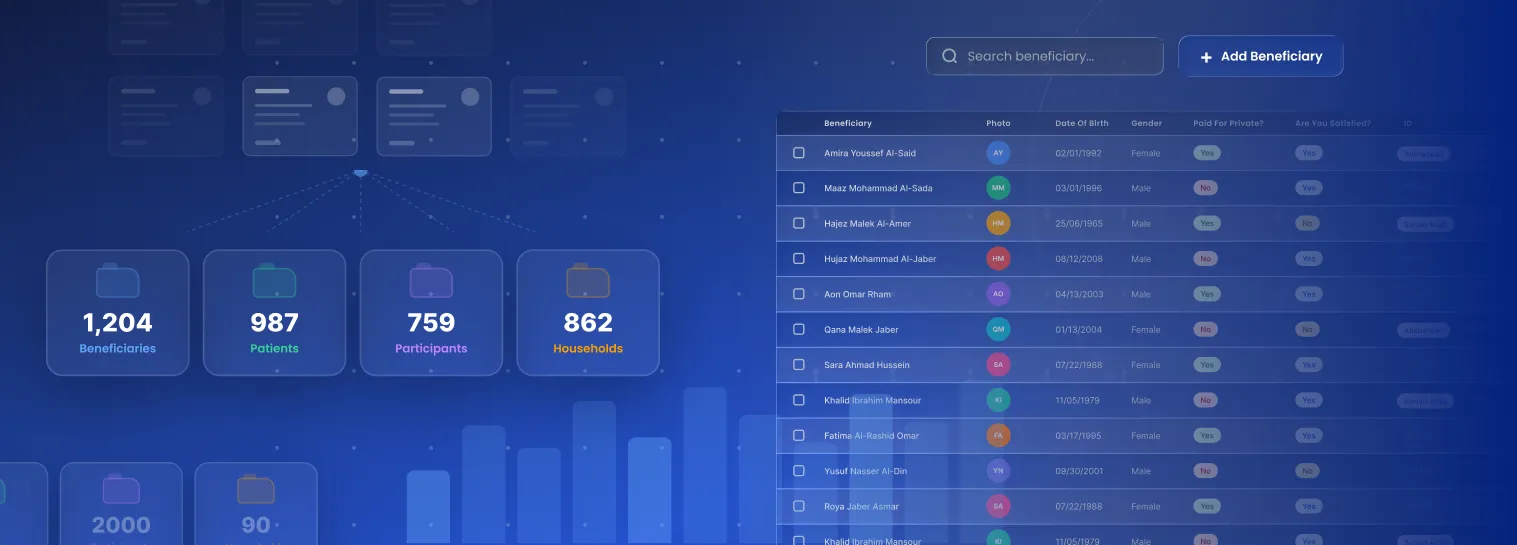
Connecting Case Management Data to Continuous Learning
How to Spot Service Gaps in Real Time
Organizations today collect vast amounts of information through their case management processes. Yet many NGOs, government agencies, and development programs still use this data primarily for reporting and compliance purposes. The real opportunity lies in transforming case management data into actionable insights that support continuous learning, adaptive management, and evidence-based decision making.
Modern organizations increasingly rely on Case Management Software, Monitoring and Evaluation Software, and Impact Measurement Software to understand beneficiary needs, improve service delivery, and strengthen program outcomes. By combining Monitoring and Evaluation (M&E) practices with Case Management, Impact Measurement, and Real-Time Monitoring, organizations can identify service gaps early and adapt programs before challenges affect overall performance.
This shift enables organizations to move beyond compliance and embrace a culture of learning, adaptation, and continuous improvement.
Monitoring and Evaluation Best Practices Beyond Compliance Reporting
Many organizations focus their monitoring systems on answering questions such as:
- How many beneficiaries were served?
- How many referrals were completed?
- Were project activities delivered on schedule?
- Were targets achieved?
While these metrics are important, they often fail to explain why certain outcomes are achieved or why others fall short.
One of the most important monitoring and evaluation best practices is moving beyond activity tracking and exploring the factors that influence outcomes. Effective Program Monitoring should help organizations understand barriers, opportunities, and emerging trends that affect project success.
Rather than simply measuring outputs, organizations should use Outcome Monitoring, Beneficiary Tracking, and Impact Measurement to uncover the underlying drivers of program performance.
Case Management Data Analysis for Continuous Learning
Every beneficiary interaction generates valuable information. When viewed individually, a case record tells the story of a single person or family. When viewed collectively, thousands of records become a powerful source of organizational learning.
Effective Case Management Data Analysis allows organizations to identify patterns across populations, locations, and service types. Through NGO Case Management and Humanitarian Case Management systems, organizations can monitor:
- Service access trends
- Referral completion rates
- Beneficiary engagement levels
- Geographic disparities in service delivery
- Outcome achievement across population groups
- Recurring barriers to service completion
This information supports Continuous Learning by helping teams understand not only what happened, but why it happened.
By connecting Beneficiary Tracking and Outcome Monitoring, organizations gain a deeper understanding of how interventions influence long-term change.
How to Identify Service Gaps in Case Management Through Real-Time Monitoring
A common challenge for development and humanitarian organizations is understanding how to identify service gaps in case management before they significantly impact program outcomes.
This is where Real-Time Monitoring for NGOs becomes essential.
Imagine a program supporting vulnerable households across several districts. Case workers begin documenting missed appointments among beneficiaries referred to healthcare, education, or protection services.
At first, the issue appears isolated. However, a Real-Time Dashboard connected to the organization's Case Management Software reveals a growing trend. Families in a specific geographic area consistently fail to complete referrals.
A deeper review of the data uncovers the root cause: limited transportation options prevent beneficiaries from reaching service providers.
Without access to integrated case data and Real-Time Monitoring, the organization might incorrectly assume beneficiaries lack motivation or awareness. Instead, Case Management Data Analysis exposes a systemic barrier affecting service delivery.
This insight allows program managers to:
- Provide transportation support
- Adjust referral locations
- Partner with local service providers
- Modify outreach schedules
- Reallocate resources to underserved communities
This is a practical example of how to identify service gaps in case management and address them before they affect overall program success.
Adaptive Management in Development Programs Starts with Better Data
Effective Adaptive Management in Development Programs depends on access to timely, reliable information.
Organizations can no longer afford to wait for quarterly reports or endline evaluations before responding to emerging challenges. Instead, they need systems that support continuous analysis and rapid decision making.
By combining Monitoring and Evaluation Software, Case Management Software, and Impact Measurement Software, organizations can create an integrated approach to learning and improvement.
This approach supports:
- Faster Problem Detection
- Organizations can identify operational bottlenecks before they affect large numbers of beneficiaries.
- Improved Program Performance
- Teams can allocate resources where they are needed most.
- Stronger Outcome Tracking
- Organizations can continuously evaluate progress toward intended results.
- Better Service Delivery
- Programs become more responsive to community needs.
- Enhanced Results-Based Management
- Leaders gain access to reliable evidence that supports planning, implementation, and accountability.
The result is a more responsive and effective approach to Program Adaptation and organizational learning.
Using Case Data for Impact Measurement and Program Adaptation
Many organizations struggle to understand how their interventions contribute to long-term outcomes. This is why Using Case Data for Impact Measurement has become an increasingly important practice within the development sector.
Case records provide valuable evidence about beneficiary journeys, service utilization patterns, and outcome achievement. When integrated into broader Impact Measurement frameworks, these insights help organizations understand how and why change occurs.
This information supports:
- Program Adaptation
- Evidence-Based Decision Making
- Social Impact Measurement
- Outcome Tracking
- Service Quality Improvement
- Resource Optimization
Organizations can use this evidence to strengthen interventions, improve service delivery, and maximize impact.
Building a Learning-Oriented Monitoring and Evaluation Framework
The future of Monitoring and Evaluation is not simply about reporting results. It is about building systems that support learning, adaptation, and continuous improvement.
A learning-oriented framework integrates:
- Case Management
- Program Monitoring
- Beneficiary Management
- Outcome Monitoring
- Impact Measurement
- Results-Based Management
- Real-Time Dashboards
Together, these components create a foundation for stronger decision making and greater accountability.
Organizations that invest in integrated Monitoring and Evaluation Software, Case Management Software, and Impact Measurement Software are better positioned to identify service gaps, respond to changing circumstances, and improve outcomes for the communities they serve.
By connecting case management data to continuous learning, organizations can transform everyday case records into a strategic resource for adaptive management, program improvement, and long-term impact.
Book a demo today and see how M&E Plus can help your organization identify service gaps faster, improve outcomes, and measure impact with confidence.